Coastal Home Buying in Imperial Beach: Key Insights
Real Estate, Coastal Living, Imperial Beach
Buying a Coastal Home in Imperial Beach: What Buyers Should Know About Flood Zones and Sea-Level Rise
Imperial Beach offers laid-back surf culture, walkable streets, and some of the most affordable oceanfront living in San Diego County. But for first-time buyers, VA and military families, relocators, and coastal investors, one topic has to sit right alongside price and views: understanding flood zones and the realities of sea-level rise.
1. What Should Buyers Know About Flood Risk in Imperial Beach?
Compared with other San Diego beach communities, Imperial Beach still feels like a “last-chance” opportunity to own near the sand without paying La Jolla or Coronado prices. As of late 2026, typical home values generally range from about $830,000 to $860,000, depending on the data source, with median sale prices often in the mid-$800,000s. Realtor.com characterizes the area as leaning toward a buyer’s market, with more inventory, longer days on market, and plenty of room for negotiation on list price.
For VA and military buyers stationed at Naval Base San Diego, North Island, or nearby facilities, Imperial Beach offers a short commute, ocean air, and a strong rental market if you get PCS orders later. For first-time buyers and relocators, it’s a chance to unlock coastal living at a relative discount. And for investors, the combination of tourism, long-term rental demand, and limited land makes the city compelling—if you understand the risks and regulations connected to water.
The Big Picture: Living in a Low-Lying Coastal City
Imperial Beach is beautiful—and low-lying. The city is bordered by the Pacific Ocean to the west and the Tijuana River Estuary to the south and east. That geography delivers incredible natural scenery but also means the area is more exposed to:
Coastal flooding from waves, storm surge, and high tides
Floodplain inundation from the Tijuana River and its estuary during heavy storms
Local “nuisance” flooding when storm drains and low-lying streets can’t handle runoff or king tides
The city has documented these hazards for years. Earlier planning documents highlighted both surface-runoff flooding and floodplain risks around the Tijuana River. More recently, Imperial Beach updated its General Plan / Local Coastal Program in 2024 and completed a Sea Level Rise Vulnerability Assessment in 2016, so buyers today benefit from a relatively clear picture of where water issues are most likely to show up over the coming decades.
📌 Key Takeaway: In Imperial Beach, “location, location, location” isn’t just about views—it’s also about elevation, proximity to the estuary, and your home’s official flood zone.
2. How Can You Check a Property's FEMA Flood Zone?
FEMA Flood Zones in Plain English
Flood zones are designations used by FEMA to describe how likely an area is to flood in a given year. In Imperial Beach, you’ll most often see:
Zone A / AE – Areas with at least a 1% annual chance of flooding (the “100-year floodplain”). These are inland or estuary-adjacent areas where river or stormwater flooding is a concern. AE zones typically have a specified base flood elevation (BFE), which matters for construction and insurance.
Zone V / VE – Coastal high-hazard areas exposed to wave action and storm surge. These are usually closer to the shoreline and carry stricter building standards and higher insurance costs because of the combined risk of flooding and wave damage.
Zone X (shaded or unshaded) – Areas of moderate or minimal flood risk. Flood insurance is typically optional here, but “optional” doesn’t always mean “unnecessary,” especially in a changing climate.
Imperial Beach’s zoning regulations and floodplain overlay districts rely on these FEMA Flood Insurance Rate Maps (FIRMs). The most flood-prone areas—especially along the oceanfront and near the Tijuana River Estuary—fall into the Special Flood Hazard Areas (SFHAs), which include Zone A/AE and V/VE.
How to Check a Property’s Flood Zone Before You Write an Offer
If you’re serious about a specific home, don’t guess about its flood risk. You can take a few simple steps:
Visit the FEMA Map Service Center online and enter the property’s address to see its official flood zone and, in many cases, the base flood elevation. This is the standard reference for lenders and insurers.
Use the City of Imperial Beach’s GIS “Common Flooding Areas” map and the 2024 100-year floodplain map, available through the city’s website. These tools show localized areas that tend to flood during storms or extreme tides, even if they don’t always appear dramatic on national maps.
Ask your agent to obtain the property’s Natural Hazard Disclosure (NHD) report, which is required in California and will flag whether the home is in a FEMA-designated flood zone, coastal high-hazard area, or other special hazard zones.
💡 Pro Tip for VA & Military Buyers: VA loans allow you to finance homes in flood zones, but your lender will require appropriate flood insurance and may scrutinize coastal high-hazard areas more closely. Get clarity on insurance costs early so they don’t derail your approval.
3. Does Every Coastal Home Require Flood Insurance?
Flood Insurance: What It Means for Your Monthly Payment
For homes in Special Flood Hazard Areas (Zones A, AE, V, VE) with federally backed mortgages—including VA and FHA loans—flood insurance is mandatory. Premiums can vary widely based on:
The home’s elevation compared with the base flood elevation (BFE)
Whether the structure is elevated on pilings or built slab-on-grade
Distance from the shoreline or estuary and local mitigation measures
With FEMA’s newer Risk Rating 2.0 system, rates are more individualized. A well-elevated home in a mapped flood zone might have manageable premiums, while a low-lying structure near the surf line could be significantly more expensive to insure. Before you fall in love with a beachfront cottage, ask an insurance agent for an estimated premium quote and request any existing elevation certificate from the seller—it can make a dramatic difference in cost.
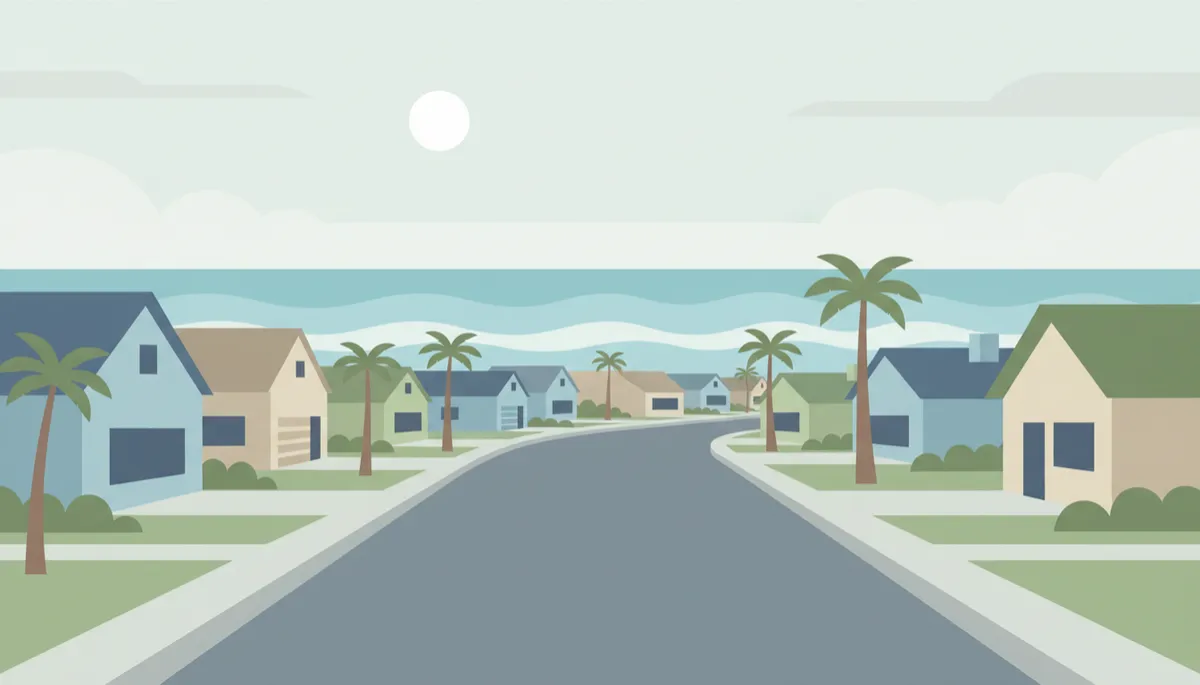
Low-lying coastal streets can face nuisance flooding even outside major storms.
4. How Could Sea-Level Rise Affect a Coastal Property?
Sea-Level Rise in Imperial Beach: What the Science Says About the Next Few Decades
Projected Sea-Level Rise by 2047, 2050, and 2100
Sea-level rise isn’t some distant 100-year concept for Imperial Beach—it’s already influencing king tides and storm flooding. Studies for the California coast and the San Diego region suggest:
By around 2047, Imperial Beach could see roughly 1.6 feet of sea-level rise in a no-adaptation scenario, according to the city’s 2016 Sea Level Rise Assessment.
By 2050, regional projections indicate 0.5 to 1.2 feet of rise relative to year-2000 levels, with some scenarios reaching up to 2 feet in the San Diego area, which would mean more frequent “nuisance” flooding and beach narrowing.
By 2100, statewide estimates range from about 1 to 6.6 feet of rise, depending on global emissions and warming. At the higher end of that range, long-term planning may involve major infrastructure changes or even managed retreat in certain locations.
These numbers aren’t meant to scare you away from buying in Imperial Beach. Instead, they help you think clearly about time horizon. A first-time buyer planning to stay 7–10 years, a military family expecting one or two duty cycles, and an investor holding for 30 years will each weigh these projections differently.
What Sea-Level Rise Means on the Ground
The practical impacts of rising seas in Imperial Beach show up in several ways:
More frequent flooding during winter storms and king tides, especially in low-lying streets west of Seacoast Drive and areas near the Tijuana River Estuary.
Beach erosion and beach loss, which can affect both property protection and the local tourism economy. A 2026 study estimated California beaches could lose more than 14% of their area by 2050, with Southern California counties facing tens to hundreds of millions in lost tourism revenue.
Stress on infrastructure—including wastewater pipelines, pump stations, and roads—that are already flagged as vulnerable in Imperial Beach’s sea-level rise assessments.
Combined with higher groundwater tables, these changes can mean that even homes that rarely flooded in the past may see more frequent shallow water on streets or in yards, especially during heavy rain plus high tide events.
How the City Is Responding: Resilience and Adaptation Planning
The good news for buyers is that Imperial Beach isn’t ignoring these issues. The city has:
Completed a Sea Level Rise Vulnerability Assessment (2016) and a Community Resilience Plan, identifying vulnerable neighborhoods, infrastructure, and potential adaptation strategies such as dunes, living shorelines, and updated building standards.
Partnered with organizations like USC Sea Grant and used tools such as the USGS CoSMoS 3.0 coastal storm modeling system to understand how sea-level rise and storms interact along this stretch of coast.
Updated its Local Coastal Program and is working under state guidance (including California’s sea-level rise policies and SB 272 requirements) to integrate adaptation into zoning and development decisions.
📌 Key Takeaway: When you buy in Imperial Beach, you’re not just betting on one property—you’re also betting on the city’s ability to adapt. Reviewing local plans and talking with city staff can give you confidence about that long-term trajectory.
5. What Should Buyers Know About Insurance and Financing?
Insurance and financing are where flood risk shows up in your monthly budget. Lenders look at overall payment affordability, which includes principal, interest, homeowners insurance, and—if required—flood insurance. A property with higher premiums might still work for you, but it can reduce how much you qualify to borrow or tighten your monthly cash flow.
Conventional, VA, and FHA loans all allow financing in flood zones, but they require proof of adequate flood coverage before closing.
Some lenders may apply stricter underwriting in coastal high-hazard (V/VE) zones or where sea-level rise concerns are well documented.
Private flood policies can sometimes offer different coverage options than the National Flood Insurance Program (NFIP), so it’s worth comparing.
For VA and military buyers in particular, it’s smart to ask your lender early how they treat coastal properties and to loop in an insurance broker while you’re still in the shopping phase—not after you’ve opened escrow.
6. What Property Disclosures and Reports Should You Review?
Practical Due Diligence Steps for Coastal Buyers in Imperial Beach
1. Combine Market Data with Hazard Data
Start by understanding both the price side and the risk side of the equation. On the price side, Imperial Beach’s median sale prices in the mid-$800,000s and a cooler, more balanced market mean many buyers can negotiate closing costs, repairs, or price adjustments. On the risk side, use FEMA maps, the city’s GIS tools, and sea-level rise projections to see how different neighborhoods compare in terms of flood exposure.
2. Ask the Right Questions About the Property’s History
During your inspection and disclosure review, don’t be shy about asking:
Has the property ever experienced flooding in the home, garage, or yard, and if so, when and how deep?
Has the seller ever filed a flood insurance claim or made flood-related repairs?
Are there drainage improvements, sump pumps, or backflow preventers installed?
In California, sellers must provide detailed disclosure forms, but specific follow-up questions often surface details that generic checkboxes miss—especially in older homes that have lived through multiple El Niño seasons.
7. How Can Buyers Evaluate Long-Term Ownership Costs?
3. Evaluate Elevation, Construction, and Site Design
Two homes in the same flood zone can have very different risk profiles. Look for:
Structures that are elevated above surrounding grade or built on pilings rather than slab-on-grade foundations, especially near the shoreline.
Thoughtful site grading and drainage that directs water away from the home and garage, with clear pathways to the street or storm drains.
Use of flood-resistant materials in lower levels, such as tile instead of carpet, and the placement of mechanical equipment (water heaters, HVAC units, electrical panels) above likely flood levels.
💡 Pro Tip for Investors: A property that’s slightly farther from the sand but better elevated and cheaper to insure can often deliver a stronger, more stable cap rate over time than a riskier, high-premium oceanfront home.
8. What Questions Should You Ask Before Making an Offer?
4. Talk to the City and Your Lender Early
If you’re considering major renovations, a tear-down, or building new, schedule a conversation with the City’s Community Development Department or Floodplain Administrator before closing if possible. They can help you understand:
Whether the lot falls in a floodplain overlay or coastal high-hazard area with special construction standards
If a Letter of Map Amendment (LOMA) or Letter of Map Revision (LOMR) has been issued or might be possible to adjust the mapped flood zone based on site-specific elevation data
How future sea-level rise policies may affect redevelopment, shoreline protection, or setback requirements
At the same time, keep your lender and insurance agent in the loop. For VA buyers, confirm that the combination of mortgage payment, homeowners insurance, and flood insurance still fits within the VA residual income and debt-to-income guidelines.
9. Where Can You Find Reliable Flood and Sea-Level Information?
Several public tools and agencies provide data you can review alongside your agent and insurance professionals:
FEMA flood maps – Help identify mapped flood hazards and may affect insurance requirements and building standards.
NOAA’s Sea Level Rise Viewer – Provides visual scenarios for potential coastal inundation under different sea-level rise assumptions.
City of Imperial Beach – Hosts GIS maps, floodplain information, and sea-level rise planning documents on its website.
County of San Diego – Offers regional hazard and planning resources that can give additional context.
These tools are starting points, not final answers. Buyers should always verify conditions at a specific property and consult appropriate insurance, engineering, and technical professionals before making decisions.
10. How Can You Make a More Informed Coastal Home Purchase?
Balancing Lifestyle, Risk, and Long-Term Value
Buying a coastal home in Imperial Beach is ultimately a trade-off decision. On one side of the scale: morning surf checks, walkable beach access, ocean breezes, and the satisfaction of owning in a community many people only visit on vacation. On the other side: higher exposure to flooding, potentially higher insurance costs, and the uncertainty that comes with long-term sea-level rise projections.
For first-time buyers, that might mean choosing a condo or townhome a few blocks inland, where flood risk and premiums are lower, while still enjoying quick bike rides to the pier. For VA and military buyers, it might mean prioritizing homes that will be easy to rent if you receive new orders—properties with solid elevation, good drainage, and strong neighborhood amenities. For investors, it may mean diversifying: pairing a high-demand oceanfront rental with a more flood-resilient inland property to balance risk and cash flow.
Final Thoughts: How to Move Forward Confidently
Flood zones and sea-level rise don’t have to be deal-breakers. They should be decision-shapers. When you understand the maps, the science, and the local regulations, you’re far better equipped to:
Compare one property’s risk and long-term outlook with another’s—not just their list prices and finishes
Budget realistically for flood insurance and potential mitigation projects over time
Negotiate from a position of knowledge, using hazard information as part of your overall analysis and offer strategy
Imperial Beach is evolving—both as a real estate market and as a coastal community preparing for a changing climate. If you pair the right professionals (agent, lender, insurance broker, and, when needed, local officials) with your own careful research into flood zones and sea-level rise, you can buy here with clear eyes and a solid plan, whether you’re planting roots, starting your first homeownership chapter, or adding a strategic coastal asset to your portfolio.
In other words: enjoy the surf and sunsets—but make sure you’ve also read the maps. Coastal properties within the same community can have very different risk profiles, so focus on each home’s specific circumstances rather than making assumptions about Imperial Beach as a whole. Transparent, practical due diligence will help you make an informed, confident decision—not a fearful one.
11. Frequently Asked Questions About Flood Risk and Coastal Buying in Imperial Beach
📌 Key Takeaway: Use these FAQs as a quick reference, then dive deeper with your agent, lender, and insurance professionals for property-specific answers.
Q1. Is it still a good idea to buy in a flood zone?
Buying in a flood zone can still make sense if you price the risk into your decision. That means understanding likely insurance costs, your time horizon, and potential mitigation projects (like elevating equipment or improving drainage). Many buyers accept some level of flood risk in exchange for coastal access, but they do so with eyes wide open rather than ignoring the maps.
Q2. How much more expensive is flood insurance near the coast?
There’s no one-size-fits-all number. Under Risk Rating 2.0, FEMA looks at factors like elevation, distance to water, and construction type. Two homes on the same street can have very different premiums. The most practical approach is to get a quote early—before you remove contingencies—and, if possible, review an existing elevation certificate to see how the home compares to base flood elevation.
Q3. If a home is in Zone X, do I really need flood insurance?
In most Zone X areas, lenders don’t require flood insurance, but that doesn’t mean the risk is zero. Local “nuisance” flooding from clogged drains, heavy rain, or king tides can still cause damage. Many coastal buyers choose a lower-cost preferred risk policy in Zone X as a form of affordable protection—especially in low-lying neighborhoods.
Q4. How does sea-level rise affect resale value?
Over time, buyers and lenders are paying more attention to climate and flood risk. Homes that are better elevated, easier to insure, and located in areas with strong city-level adaptation plans may hold value more effectively than similar homes with higher, unmanaged risk. When you think about resale, consider not just today’s buyer but the buyer 10–20 years from now, when sea-level rise may be more visible in day-to-day life.
Q5. What should VA and military buyers watch for specifically?
VA buyers should pay close attention to total monthly payment (including flood insurance) and to future rental potential if they receive PCS orders. A home that’s easier to insure, with solid elevation and good drainage, is typically easier to rent and may face fewer surprises during VA appraisal or underwriting. Loop your lender and insurance broker in early when you’re evaluating coastal properties.
Q6. Can I do anything to lower my flood insurance premium?
In many cases, yes. Strategies can include obtaining or updating an elevation certificate, elevating mechanical systems above projected flood levels, adding proper flood openings/vents, and improving site drainage. Work with a qualified engineer or contractor and an experienced insurance agent to see which upgrades might reduce your premium and improve safety.
Q7. How can I tell if a “nuisance flooding” area will affect my daily life?
Go beyond the paper maps. Visit the neighborhood after rain, talk to nearby neighbors, review the city’s “Common Flooding Areas” GIS map, and ask directly in disclosures about water on streets, driveways, or yards. Even shallow, occasional flooding can affect parking, access, and maintenance costs over time.
Q8. Who are the best professionals to involve when buying a coastal property?
In addition to your real estate agent, consider involving:
An insurance broker who regularly writes coastal and flood policies in Imperial Beach
Your lender, especially if using VA, FHA, or other government-backed financing
A qualified home inspector familiar with drainage, moisture, and coastal construction issues
City staff or the Floodplain Administrator if you’re planning major renovations or new construction
💡 Pro Tip: Treat flood and sea-level questions as part of your standard due diligence checklist—just like inspection, appraisal, and title review—so you can enjoy Imperial Beach’s coastal lifestyle with a clear, informed plan.